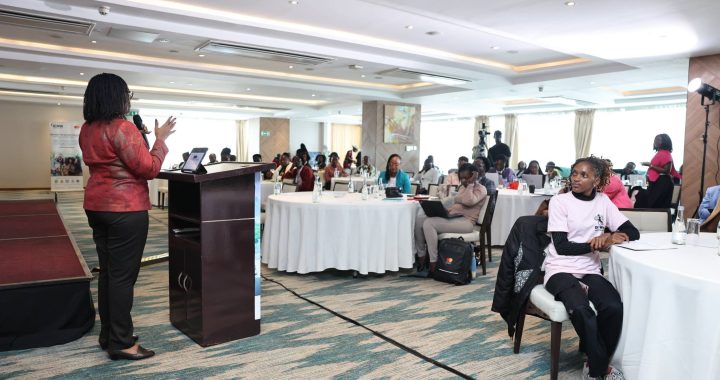
Earlier today, stakeholders in Kenya’s creative industry gathered at the Mercure Hotel in Upper Hill, Nairobi, for a national dissemination event to address systemic gender based inequalities facing young female creatives.
The forum unveiled findings from the Behind the Scenes (BtS) Kenya Project, an initiative led by the International Center for Research on Women (ICRW), a global research institution operating since 1956. Driven by a team of over 70 young researchers and seven national creative ambassadors, the project documented the barriers and lived experiences of young women aged 18 to 35 in the creative economy sector.
While delivering official remarks on behalf of the Principal Secretary for the State Department for Youth Affairs and Creative economy, Mr. Fikirini Jacobs, Dr. Josephine Etenyi, Secretary Youth Development reaffirmed the government’s commitment to translating research evidence into actionable policy framework.
Dr. Etenyi stated that the State Department for Youth Affairs and Creative Economy is spearheading several key legal and policy initiatives, such as the Youth Bill to safeguard youth rights and interests, a creative economy policy & bill to establish regulatory and protective standards for the creative industry. The state department is also focused on developing the Kenya youth development index that will measure and track the status, progress and well being of young people across selected domains.
She noted that the government recognizes young people as partners and co-creators of national development, rather than merely beneficiaries. She emphasised the need for all stakeholders to move from evidence to policy, from policy to action, and from action to measurable impact.
To foster a safe and sustainable working environment for female creatives, the research outlined three priority policy recommendations:
1. Anti-Harassment Protocols: Enforcing mandatory anti-harassment policies across all creative workplaces and production environments.
2. Intellectual Property & Fair Contracting: Passing targeted legislation that compels employers to adhere to industry-wide standards for contracts, baseline pricing, and IP protection.
3. Financial Access: Establishing strategic partnerships with financial institutions to facilitate access to tailored grants and loans for female-led creative enterprises.
The stakeholders also highlighted the need for better policies and operationalize them to ensure that the creative economy is recognised as a key input for youth development and job creation.